Related

What an Empty Barbell Taught Me About Burnout
How exercise became my mirror—and helped me find my way back.
There was a time in my life when, if something felt hard, I leaned in.
I signed up for challenges because they scared me. I loved seeing what I was capable of. Whether it was trying out for military selections, juggling full-time university while working two jobs, or throwing myself into a difficult workout, the challenge gave me energy. It made me feel alive.
If someone told me something was hard, I wanted to find out if I could do it.
Somewhere along the way, that changed.
Not all at once.
Quietly.
I started avoiding hard things.
Not because I'd become lazy.
Because even the smallest challenges suddenly felt overwhelming.
At first, I thought I'd lost my edge.
Looking back, I realize I was burning out.
Burnout didn't make me tired first. It changed my relationship with discomfort.
This was the part nobody had prepared me for.
I expected burnout to feel like exhaustion.
Instead, it made me crave comfort.
I didn't want to be cold.
I didn't want to be hungry.
I didn't want my heart rate high.
I didn't want to lift heavy.
I didn't want difficult conversations.
I wanted comfort.
Everywhere.
I'd stay up too late watching Netflix because I was desperate to escape for a couple of hours. I'd skip workouts because the thought of working hard felt unbearable. I'd reach for comfort food, not because I didn't know what I "should" eat, but because it felt easier.
I remember going to a spa with a couple of friends, expecting to enjoy one of my favourite rituals—moving between the sauna and the cold plunge.
Instead, I could barely stay in the sauna for a few minutes. The thought of stepping into the cold water actually made me feel sick.
So I wrapped myself in a towel, opened my book, and watched everyone else.
At the time, I couldn't explain why.
Looking back, I can.
It wasn't the cold water I was avoiding.
It was discomfort.
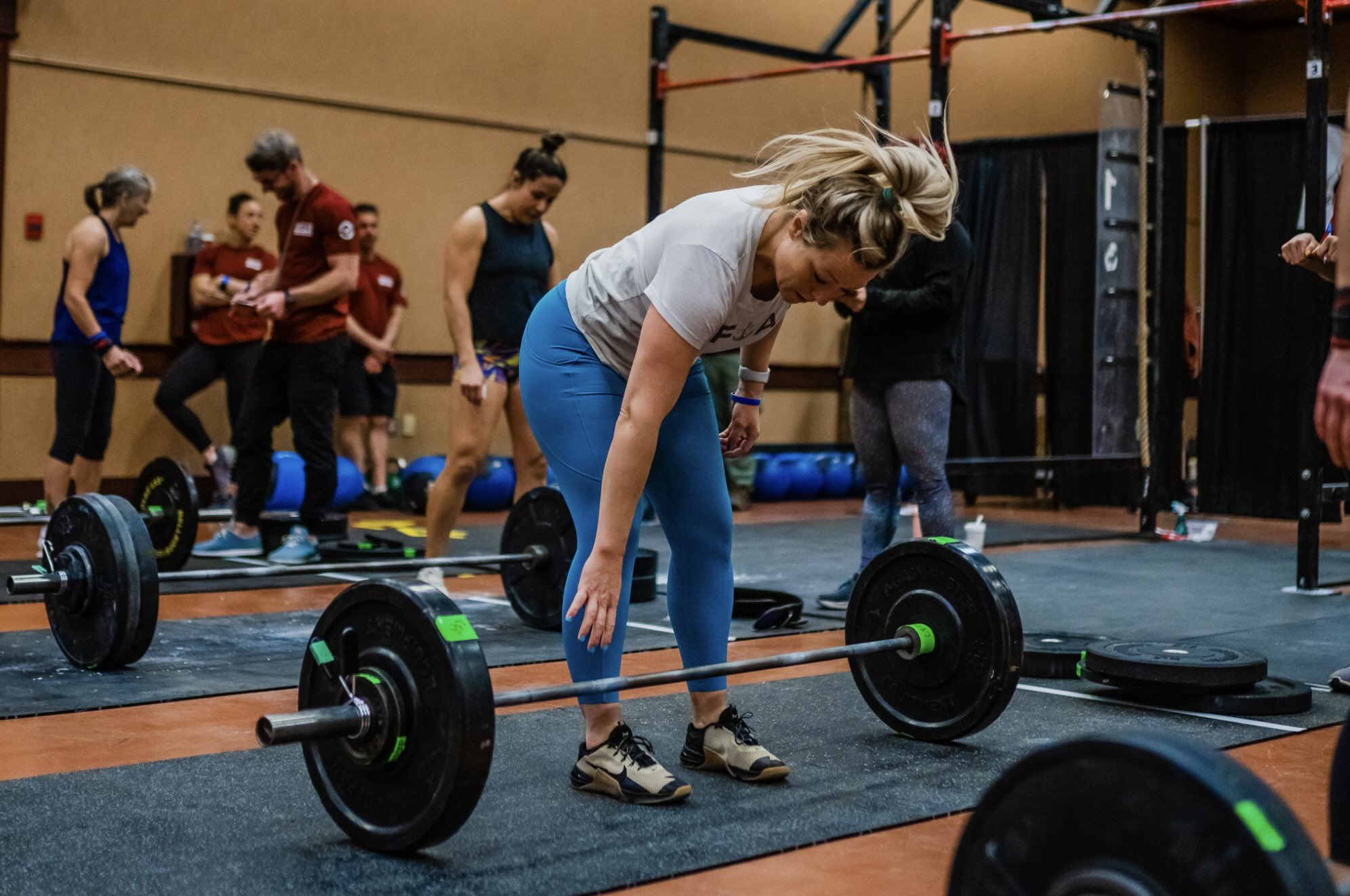
Even something as familiar as pulling the empty barbell out of the rack before class felt different. Some mornings it felt like it weighed a hundred pounds.
Not because the barbell had changed.
Because I had.
Looking back, I don't think burnout stole my strength first.
I think it stole my willingness to be uncomfortable.
The hardest part wasn't the fatigue. It was the shame.
I've coached CrossFit for years.
Logically, I knew nobody cared if I scaled a workout.
I knew no one was judging the weight on my barbell.
If anything, I knew our members would have encouraged me.
But logic doesn't always win.
I started avoiding the gym because I was embarrassed that I wasn't the athlete I used to be.
I imagined people wondering why I wasn't lifting heavier.
Why I wasn't doing pull-ups.
Why I wasn't pushing harder.
None of those thoughts came from anyone else.
They came from me.
And I don't think I'm alone.
I've seen it in former athletes.
In new parents.
In people stepping into leadership roles.
In caregivers.
In people navigating grief.
Life gets bigger.
Your responsibilities grow.
But your expectations of yourself often don't.
We expect ourselves to perform like we did in a completely different season of life.
When we can't, shame creeps in.
Instead of asking for help, we hide.
Instead of scaling, we skip.
Instead of letting people support us, we convince ourselves we should be able to handle it on our own.
I know.
Because that's exactly what I did.
Finding my way back
Recovery didn't look anything like I thought it would.
It wasn't one incredible workout that changed everything.
It wasn't motivation.
It wasn't discipline.
It was permission.
Permission to meet myself where I was.
For months, I came to class and did bodyweight versions of workouts I used to load with barbells.
Sometimes my only goal was simply to show up.
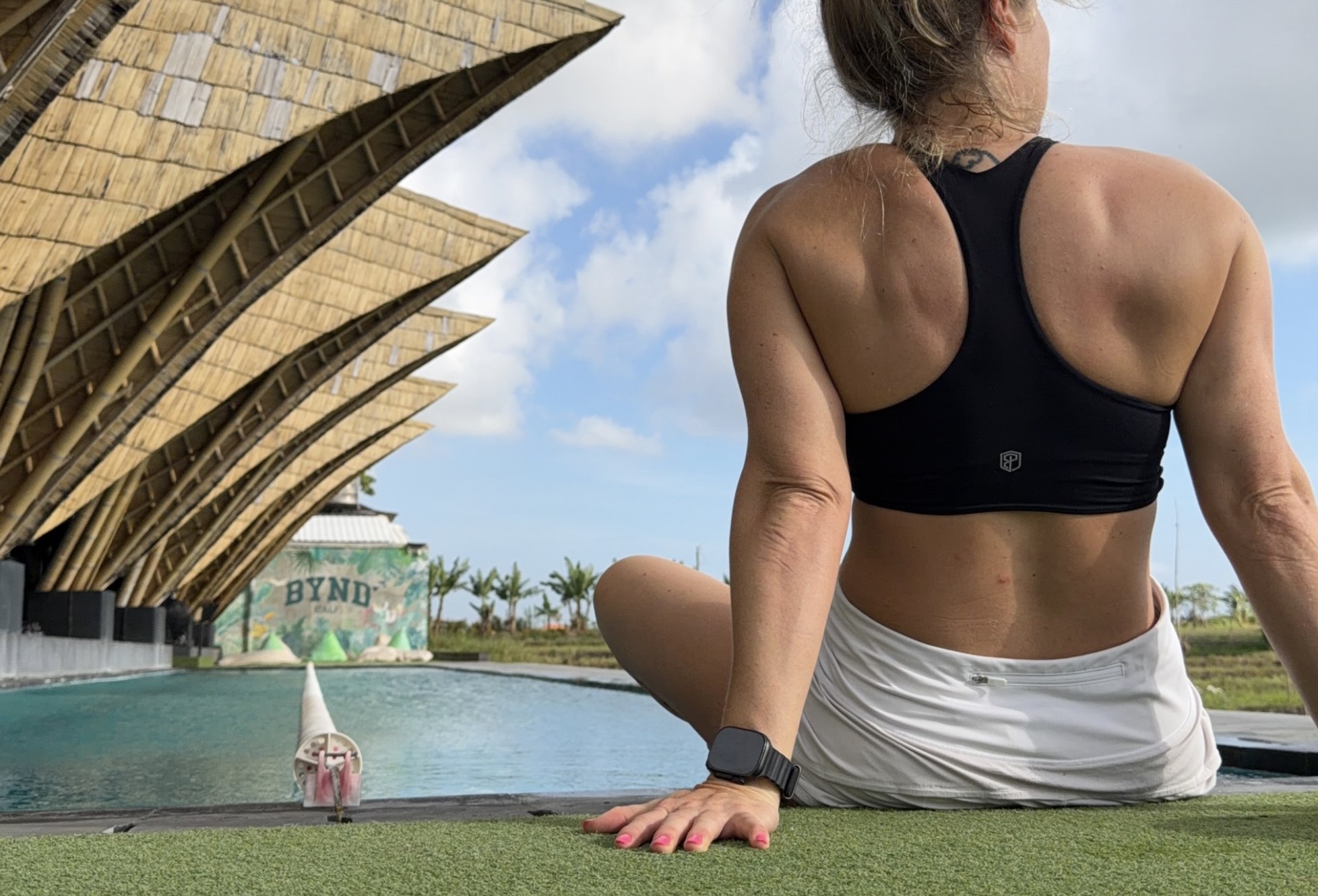
I took a couple of solo trips where success wasn't measured by productivity.
The goal was simple.
Walk.
Sleep.
Eat nourishing food.
Get some sunshine.
Read a book.
Breathe.
I stopped trying to prove something.
I started trying to heal.
Recovery didn't happen all at once.
It showed up in tiny moments.
Months after that first spa visit, I went back.
This time I wasn't trying to prove anything.
I was just curious.
Maybe I'd put one foot in.
Maybe I'd stay for two seconds.
And I did.
The next visit became twenty seconds.
Eventually it became a minute.
It wasn't really about the cold plunge.
It was about discovering that discomfort no longer felt impossible.
Little by little, other things started changing too.
I found myself choosing the healthier meal because it didn't feel overwhelming.
I found myself pushing just a little harder in workouts.
Eventually, I'd pull that same empty barbell out of the rack... and it didn't feel quite so heavy.
A few weeks ago, I woke up sore after a workout.
I actually smiled.
Not because I love being sore.
Because I hadn't been sore in over a year.
Not because I'd been training perfectly.
Because I finally felt capable of challenging myself again.
Standing in my kitchen that morning, I realized something.
I wasn't becoming the person I used to be.
I was becoming someone who finally knew how to take care of herself.
What I know now
One of the things I say most often as a coach is, "Give yourself a break."
It's funny how much easier it is to say that to someone else than it is to believe it yourself.
I also have another favourite saying: "Don't eat like an asshole."
People laugh, but what I really mean is this: you don't have to be perfect. Just make the next choice a little kinder to your future self.
The same goes for training.
Meet yourself where you are.
Scale when you need to.
Push when you're ready.
Trust that this season won't last forever.
These days, I still notice how that empty barbell feels when I pull it out of the rack.
Some mornings it feels light.
Some mornings it doesn't.
The difference is that I don't see it as a judgment anymore.
I see it as a check-in.
If it feels heavier than usual, I don't ask myself what's wrong with me.
I ask a different question.
What do I need today?
Maybe I need to push.
Maybe I need to scale.
Maybe I need a little more sleep.
Maybe I need to eat a little better.
Maybe I just need to give myself a break.
If you're in a season where you don't recognize yourself, please know you're not alone.
Sometimes rebuilding your fitness isn't really about fitness.
Sometimes it's about rebuilding your confidence that you can do hard things again.
And if you need someone to help you find your way back, reach out.
That's what coaches are for.
Christine Gatherum
Co-owner & Coach, Anchored Athletics
Christine is a CrossFit Level 3 Trainer (CF-L3) with a degree in Kinesiology, a Diploma in Sport Performance, and multiple nutrition coaching certifications. With more than 20 years of coaching experience - including serving as a Strength and Conditioning Coach for Canada's Special Forces JTF2 - she is passionate about helping people build confidence, resilience, and lifelong health through movement, one season at a time.